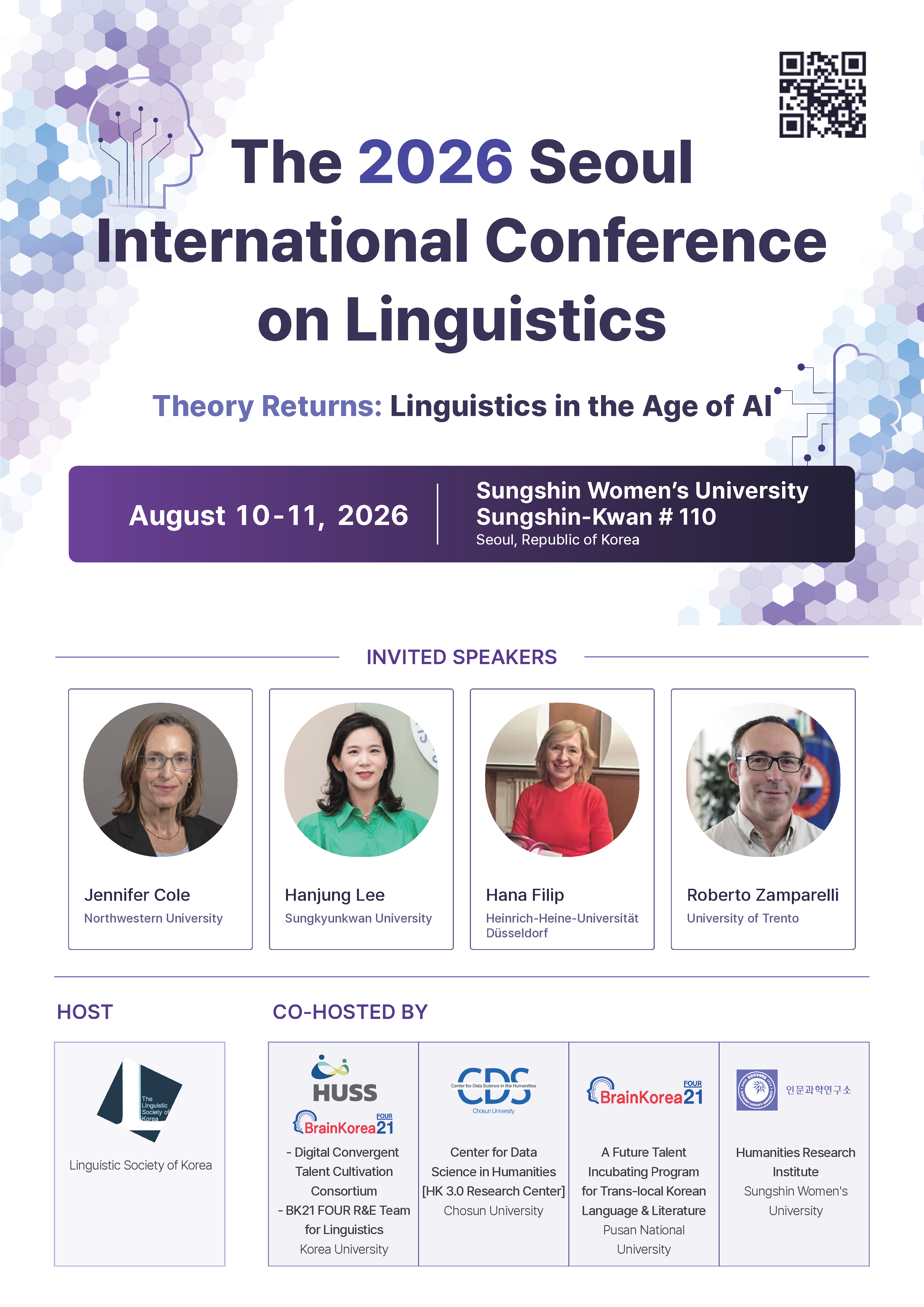
The 2026 Seoul International Conference on Linguistics
Theory Returns: Linguistics in the Age of AI
Conference Description
The Linguistic Society of Korea (LSK) is pleased to announce the 2026 Seoul International Conference on Linguistics (SICOL-2026), to be held on August 10–11, 2026 at Sungshin Women’s University, Seoul, Korea.
Recent advances in artificial intelligence, particularly large language models (LLMs), have transformed how language is processed, modeled, and analyzed. As AI systems increasingly simulate aspects of linguistic competence and performance, fundamental questions concerning the nature of linguistic knowledge, structure, and representation become ever more pressing.
In such a rapidly evolving intellectual landscape, theoretical linguistics assumes renewed importance. Sustained inquiry into the underlying architecture of the human language faculty—its formal properties, constraints, and explanatory principles—is indispensable for understanding both the limits and implications of AI-driven approaches to language.
SICOL-2026 aims to provide a forum for rigorous investigation of the essential properties of human language, encouraging contributions that engage foundational questions of linguistic theory, formal modeling, and empirical methodology in dialogue with contemporary developments in AI.
Invited Speakers
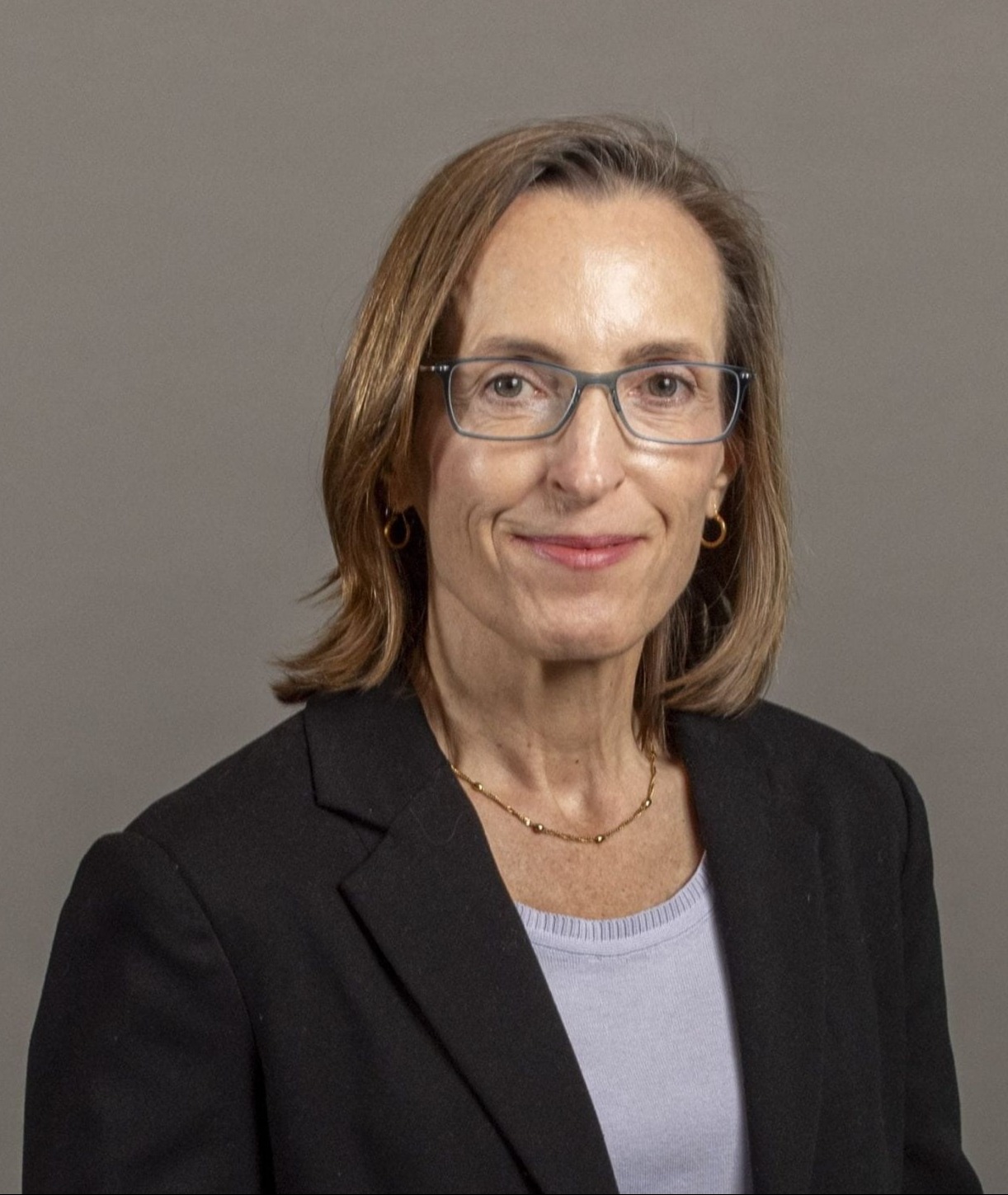
Jennifer Cole
Professor, Department of Linguistics, Northwestern University
Jennifer Cole is a Professor in the Department of Linguistics at Northwestern University. Her research focuses on the phonology and phonetics of prosody—the intonation and temporal patterns of spoken language—and how prosody encodes sentence structure, communicative intentions, and the dynamics of social interaction. She employs computational and statistical methods to model prosody in experimental and corpus data, with an emphasis on automated analysis of large, multi-talker datasets across diverse languages. She has pioneered the use of crowd-sourced perceptual ratings as a basis for building cross-linguistic models of prosody. Her current work includes collaborative projects on prosody in individuals with autism and neurological speech disorders, as well as the development of open, scalable, data-driven infrastructure for collaborative language science research. For more information, visit her homepage and the Prosody and Speech Dynamics Lab.
Talk: Continuity and the emergence of the discrete: Intonation and its meaning
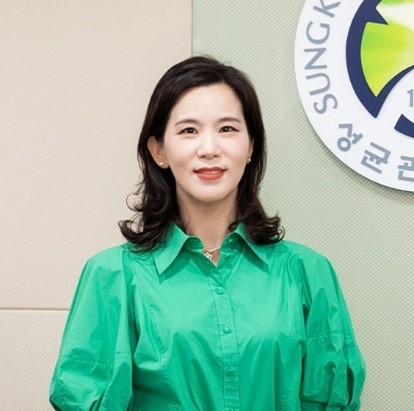
Hanjung Lee (이한정)
Professor, Department of English Language and Literature, Sungkyunkwan University
Hanjung Lee (PhD 2001, Stanford University) is Professor of English Linguistics at Sungkyunkwan University. She previously held a research position at the University of North Carolina at Chapel Hill, USA and a faculty position as Assistant Professor of Linguistics at the University of Minnesota-Twin Cities, USA. Her research interests lie at the interface of grammar, semantics, and pragmatics, with a particular focus on how linguistic form shapes interpretation and patterns of language use. Her research combines theoretical modeling with experimental and corpus-based methods, and her work has appeared in leading journals including Language (2024), Journal of Linguistics (2022, 2016), Journal of Pragmatics (2013, 2007), Cognition (2007), and Natural Language and Linguistic Theory (2003).
She is also the author of the book Artificial Intelligence and Linguistic Imagination: A New Paradigm in Linguistic Research (2025, Sungkyunkwan University Press) and the forthcoming monograph Polysemy in Semantics with Contextualized Language Models: Distribution, Boundaries and Interpretation of Polysemous Senses (Topics in English Linguistics 124, De Gruyter Brill). In these works, she develops a large-scale, usage-based account of verbal polysemy and meaning construction using contextualized language models and experimental methods.
Her recent research has increasingly focused on developing empirically grounded models of meaning that integrate pragmatic theory with experimental design and computational approaches.
For more information, visit her homepage and the SKKU Language and Cognition Lab.
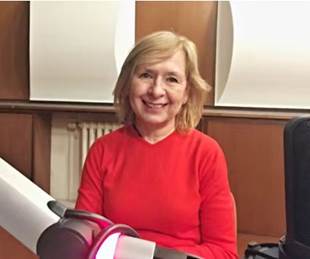
Hana Filip
Professor, Department of Linguistics III (Semantics and Pragmatics), Heinrich Heine Universität Düsseldorf
Hana Filip is a Professor of Semantics at Heinrich Heine Universität in Düsseldorf. Her research explores the conceptual foundations of semantics, integrating logical/formal and cognitive traditions. She specializes in aspect, genericity, the mass/count distinction, and the interaction between noun phrase semantics and verbal aspect. She received her Ph.D. in Linguistics from the University of California at Berkeley, and her dissertation, Aspect, Eventuality Types and Noun Phrase Semantics, was published in the Outstanding Dissertations in Linguistics series. Prior to her current role, she held faculty positions at Stanford University, Northwestern University, and the University of Rochester, and worked as a computational linguist at SRI International and ICSI at Berkeley. Her recent research, including the DFG-funded project on the "Individuation of Eventualities and Abstract Things," continues to advance the study of semantic interpretation across diverse languages such as English, German, and various Slavic languages. For more information, visit her homepage
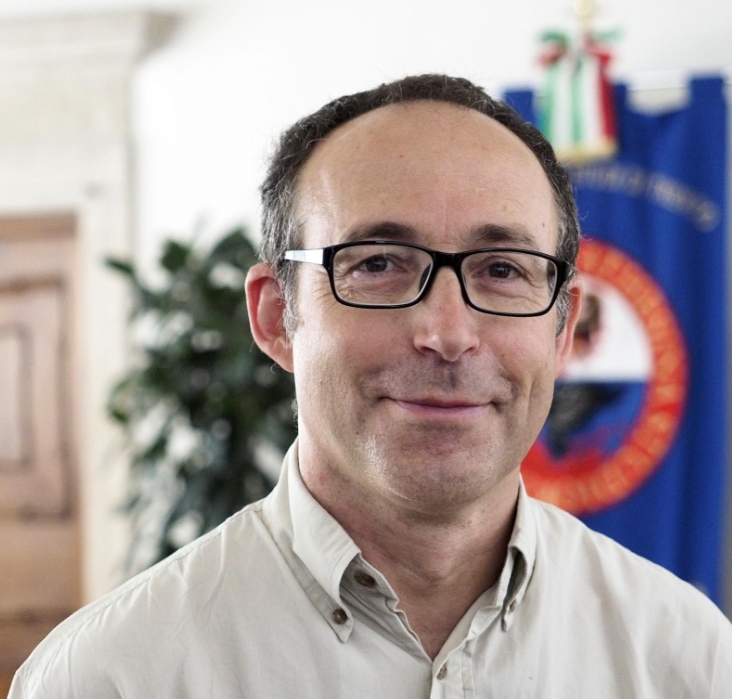
Roberto Zamparelli
Professor, Center for Mind/Brain Sciences, University of Trento
Roberto Zamparelli is an Associate Professor at the Center for Mind/Brain Sciences (CIMeC), University of Trento.
A leading figure in formal semantics and the syntax of Noun Phrases (DPs), his recent research bridges the gap between theoretical linguistics and generative AI.
In his 2025 work, "Doing Linguistics in the GPT era," he explores how the linguistic competence of Large Language Models (LLMs) compares to human cognition, advocating for the use of "human-sized" training data (e.g., the BabyLM challenge) to probe the limits of data-driven approaches.
His current projects, including REPLAI (Repetition Experiments as Probes on Linguistics Analysis and Integration) and TREiL, investigate how computational models can identify multilingual political views and handle complex multimodal data.
By integrating classic formal analysis with modern LLM-based methodologies, his work offers a new paradigm for understanding language evolution, semantic shifts, and the cognitive foundations of grammar.
He holds a Ph.D. from the University of Rochester and is a frequent contributor to major journals in both theoretical and computational linguistics.
For more information, visit his homepage.
Program
⭐SICOL2026 Program (with moderators) [📄SICOL2026 Proceedings]Day 1 — Monday, August 10
| 09:00–09:20 | Opening |
| 09:20–10:20 | Invited Talk 1: Roberto Zamparelli |
| 10:20–10:30 | Coffee Break |
| 10:30–12:00 | Session 1 (parallel tracks A · B · C) |
| 12:00–13:30 | Lunch |
| 13:30–14:30 | Invited Talk 2: Hana Filip |
| 14:30–16:00 | Poster Session 1 |
| 16:00–17:30 | Session 2 (parallel tracks A · B · C) |
Opening · 09:00–09:20 · Sungshin Building, #110
Invited Talk 1 · 09:20–10:20 · Sungshin Building, #110
Session 1 · 10:30–12:00
Session 1A · Sungshin Building, #110
- 10:30–11:00Investigating Scalar Implicature in Large Language Models
- 11:00–11:30When Is an Answer Enough? Q-Alternative Construction and Probing Behavior Across Korean, English, and Thai
- 11:30–12:00From Protective Formula to Pragmatic Marker: The Semantic Bleaching and Pragmatic Reanalysis of Vietnamese trộm vía
Session 1B · Sungshin Building, #212
Session 1C · Sungshin Building, #213
Invited Talk 2 · 13:30–14:30 · Sungshin Building, #110
Poster Session 1 · 14:30–16:00 · Soojung Building, #107
Session 2 · 16:00–17:30
Session 2A · Sungshin Building, #110
Session 2B · Sungshin Building, #212
- 16:00–16:30 Can LLMs Retrieve Variation? A Corpus-RAG Study of Native-Speaker Norm Drift in English as a Lingua Franca Dialogue
- 16:30–17:00 Negotiating East Asian Identities Through English: A Cross-Cultural Comparison of Japan, China, and Korea
- 17:00–17:30 Personae Through Sensory Evaluation in Taiwanese Coffee Discourse
Session 2C · Sungshin Building, #213: [HK Symposium I] Computational Tools for Naturalistic and Experimental Child Language Research
- 16:00–16:30 Lexical and Semantic Evaluation of Whisper-Based Automatic Transcription of Korean Child-Directed Speech
- 16:30–17:00 Human-Speech Detection in Naturalistic Child-Centered Audio using an Interpretable Open-Source Ensemble Voice Activity Detection Approach
- 17:00–17:30AutoHPP: An automated system for head-turn preference procedure using a deep-learning-based infant head-turn classifier
Day 2 — Tuesday, August 11
| 09:00–10:00 | Invited Talk 3: Jennifer Cole |
| 10:00–10:10 | Coffee Break |
| 10:10–11:40 | Session 3 (parallel tracks A · B · C) |
| 11:40–13:10 | Lunch |
| 13:10–14:10 | Invited Talk 4: Hanjung Lee |
| 14:10–15:40 | Poster Session 2 |
| 15:40–17:10 | Session 4 (parallel tracks A · B · C) |
| 17:10–17:30 | Closing |
Invited Talk 3 · 09:00–10:00 · Sungshin Building, #110
Session 3 · 10:10–11:40
Session 3A · Sungshin Building, #110
- 10:10–10:40 Let's Rethink Question Embedding
- 10:40–11:10 Epistemic Modality as a Bridge Between Syntax and Pragmatics: The Grammaticalisation of Speech Acts in Polar Questions. Evidence from Spanish.
- 11:10–11:40 Honorific and Elevated Vocabulary as Face-Attacking Strategies in Korean and French: A Contrastive Study of Mock Politeness
Session 3B · Sungshin Building, #212
Session 3C · Sungshin Building, #213
Invited Talk 4 · 13:10–14:10 · Sungshin Building, #110
Poster Session 2 · 14:10–15:40 · Soojung Building, #107
Session 4 · 15:40–17:10
Session 4A · Sungshin Building, #110
Session 4B · Sungshin Building, #212
- 15:40–16:10 From Declarative to Mood: Semanticizing the Speech-Act Layer of Korean -ta
- 16:10–16:40 Semantic Field Construction and Metaphorical Patterning in Classical Chinese Poetry: Evidence from Tang Dynasty Female Poets
- 16:40–17:10 Semantic Divergence in Mandarin Passives: A Distinctive Colloexeme Analysis of Agentive and Agentless Bèi Constructions
Session 4C · Sungshin Building, #213: [HK Symposium II] Infant Word Learning Across Input, Categories, and Languages
- 15:40–16:10The Role of Input Quantity vs. Language Background in Word Learning among Korean Bilingual Infants
- 16:10–16:40Shape Bias in Korean Noun Learning: Evidence from Property Ratings and Corpus Analysis in a Classifier Language
- 16:40–17:10The ManyBabies-AtHome Looking-While-Listening project: A remote cross-linguistic investigation of familiar word recognition in infants across various ages
Photos
Contact & Committee
Contact
All inquiries regarding SICOL2026 should be directed to: sicol2026@gmail.com
Organizing Committee
- Tae-Jin Yoon — Sungshin Women's University (Chair)
- Ilhwan Kim — Sungshin Women's University
- Jieun Song — Korea Advanced Institute of Science and Technology
- Suwon Yoon — University of Seoul
- Hansaem Kim — Yonsei University
- Sanghoun Song — Korea University
- Sunwoo Park — Keimyung University
Program Committee
- Hayeun Jang — Sungkyunkwan University (Chair)
- Jieun Kim — University of Ulsan
- Jungsoo Kim — Incheon National University
- Sangah Lee — Seoul National University
- Sumi Han — Hallym University
- Kyungchul Chang — Pusan National University
- Jungmee Lee — Seoul National University
- Dongwoo Park — Korea National Open University
- Ji-eun Kim — Duksung Women's University